
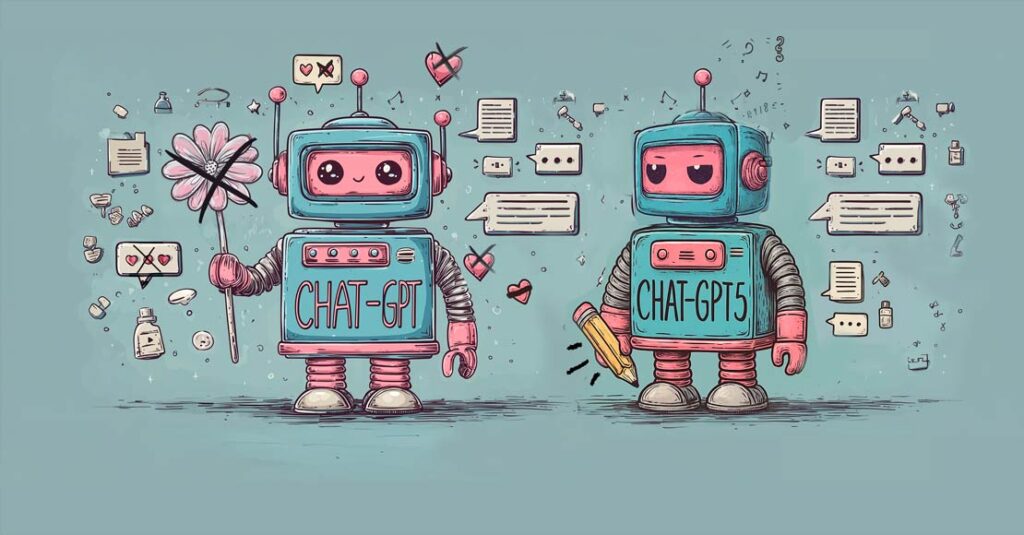
ChatGPT 5 says goodbye to flattery, marking one of the most significant shifts in the evolution of artificial intelligence.
This new version changes the way we interact with the application, offering more direct and less accommodating responses. For communication professionals and corporate communication agencies, this adjustment opens a new landscape with important implications for how we work with AI.
AI: part of our daily lives
Artificial intelligence tools are now embedded in our daily routines. More and more people are using them for a wide variety of tasks such as writing, image creation, programming, or project management.
According to data from Exploding Topics
more than 35% of people use artificial intelligence tools in their day-to-day activities.
The same site reports that 84.58% of users have increased their use of AI in the past 12 months.
Therefore, each update of such an influential model as ChatGPT has a direct impact on both users and organizations.
What changed in ChatGPT 5?
At Oxean, as a corporate communication agency focused on internal communication, we constantly track changes in the AI industry and share with our community the developments we believe matter most.

GPT-5 removes the most annoying feature of ChatGPT
One of the most frequent complaints about ChatGPT was its tendency to flatter users with overly agreeable responses and, at times, unnecessary emojis.
The issue of flattery had already been present for quite some time as something that needed to be addressed. According to an article published by Hipertextual, it could be “the most hated feature of ChatGPT.”
Undoubtedly, many users have experienced this firsthand—those overly polite responses full of emojis that felt more like decoration than substance.
More natural and thoughtful responses
With ChatGPT 5, this feature has been drastically reduced: from 14.5% to under 6% in flattering responses, according to the same Hipertextual article. Now, the interaction feels smoother and more natural, allowing for a more productive dialogue.
Does everyone like the new ChatGPT 5?
As always, every change brings out different voices and perspectives. In this case, many reactions seem to be driven more by emotion than logic.
And in a way, that’s entirely expected. After all, if AI is truly part of our lives, we have to admit that it affects us on a much more personal level than just being a handy tool.
Emotional reactions on social media
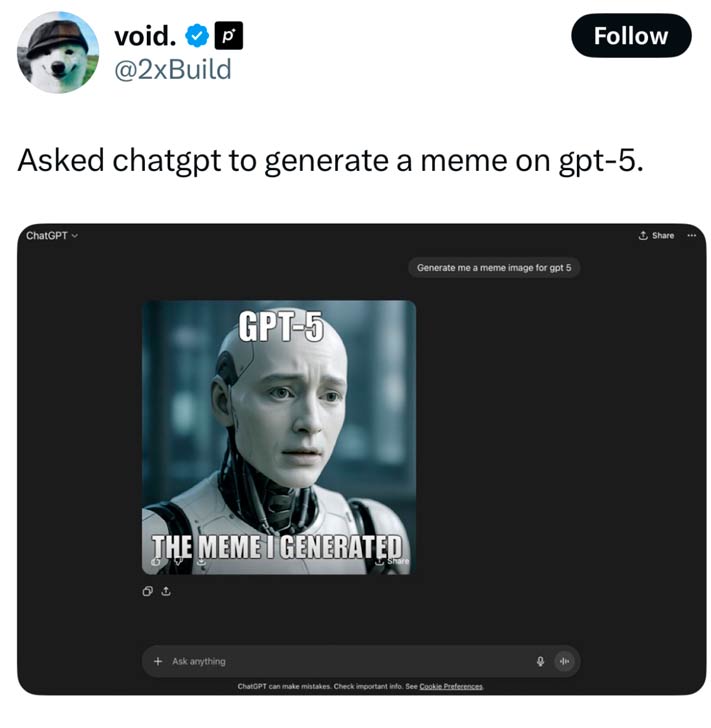
Many reactions to ChatGPT 5 are surfacing on social media—and, of course, in the form of memes that reflect with humor and irony what this change means for many users.
Analysis from specialized media
At the same time, tech and communication sites are also analyzing what’s new in ChatGPT 5 and how these changes might reshape interactions.
How is ChatGPT 5 connected to internal communication?
From our perspective, this new model can become a powerful ally for internal communication teams.
A creative partner in internal campaigns
Thanks to enhanced capabilities and deeper content creation features, ChatGPT 5 can boost creative campaigns and improve organizational communication processes. For instance, it’s especially helpful when developing creative internal communication campaigns.
As with any AI tool, the best way to evaluate it is by testing it in real scenarios. And as always, working with a professional prompt structure maximizes results and unlocks better outcomes.
Less flattery, more precision in results
On the other hand, we can assume that interacting with a model that isn’t trying to flatter us will help us sharpen our results, pushing us beyond those “first drafts” that still have room for improvement.
What’s the link between AI and cultural transformation?
Our take is that we could view this change in ChatGPT 5 as simply a shift in tone—or perhaps as something deeper.
If AI models begin to interact with us in new ways, it’s possible that our perception of these tools will evolve as well.
New work dynamics and organizational changes
This leads us to think about how AI tools are being implemented and the cultural transformation currently happening in organizations. Work dynamics are shifting rapidly; some jobs may disappear while others emerge. So we can’t ignore that we are facing a profound transformation—one that’s already underway.
The strategic role of internal communication
The connection with internal communication is direct. This area plays a key role in ensuring that digital and cultural transformation is not seen merely as a crisis.
What’s essential is to adopt a systemic perspective—one that embraces the complexity of today’s environment and enables us to approach internal communication strategically.
Keeping the human dimension in focus
At Oxean, as a 360 corporate agency, we believe AI should be implemented with the human dimension as the top priority.
Managing resistance to change, responding to crises effectively, and designing long-term organizational transformation are all essential aspects.
ChatGPT 5 says goodbye to flattery
None of these goals can be achieved without strategic internal communication—communication that builds engagement and aligns teams with business objectives.
Moreover, empowering internal comms teams through valuable learning experiences and high-quality professional consulting can make a real difference, even in complex and challenging environments.