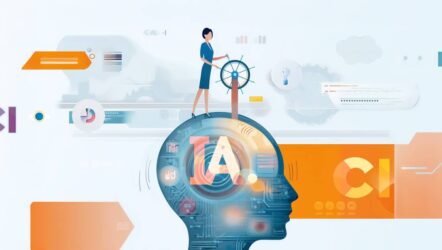
People and culture challenges in 2026 mark a turning point for organizations. People and culture areas have evolved from administrative functions into strategic actors with direct impact on the business, the employee experience, and organizational culture.
In a context defined by constant change, internal communication has become the key tool for aligning purpose, leadership, and people.
Main people and culture challenges in 2026 for organizations
People & culture teams now operate in a highly complex environment. Accelerated digitalization, new work models, and rising employee expectations are putting pressure on traditional approaches to managing people and culture.
Before analyzing each focus area in depth, it is important to understand that strategic internal communication acts as the bridge between the culture an organization declares and the real experience employees live every day.
Hyper-personalization as a challenge in people management
Internal message saturation is a reality in many organizations. Emails, platforms, chats, and notifications compete for people’s attention, affecting engagement and understanding.
Segmented and relevant internal communication
Today, employees no longer respond to mass messaging. The challenge is to move toward a “segment of one” approach: delivering the right message to the right person at the right time.
This requires:
- Data-based segmentation of internal audiences
- Active listening and continuous feedback
- Empathetic, clear, and actionable content

For people and culture teams, hyper-personalization is not just a trend, but a key strategy to improve internal engagement.
Artificial intelligence and new people & culture challenges
The integration of artificial intelligence into HR processes is already part of the present. However, its adoption brings organizational challenges related to trust, transparency, and employee well-being.
According to academic research from Cornell University on workplace well-being,
transparency and clear communication about AI are essential to reduce employee anxiety and maintain trust.
This reinforces the idea that AI should enhance—not replace—human communication in internal initiatives, career development, and talent management.
AI, trust, and human communication
The challenge is not only to automate tasks, but to maintain empathy in interactions.
Clear internal communication helps to:
- Reduce uncertainty
- Support adaptation to change
- Reinforce trust in the organization
Technology should strengthen people management, not replace the human connection.
Alignment in hybrid and distributed environments
Hybrid and remote work models are now the norm in many companies. However, building a shared sense of belonging in distributed contexts remains a major people & culture challenge. Here, strategic internal communication plays a central role.
Meanwhile, technology is necessary, but not sufficient. In fact, as we discussed in the article Can internal communication platforms bring people closer together?, closeness does not depend solely on tools, but also on how experiences and messages are designed and circulated within the organization.
Internal communication and cultural belonging
A report by Dialenga shows that more than half of companies do not have a clear strategy to improve internal employee engagement.
Therefore, people & culture teams face the challenge of balancing digital efficiency with genuine human connection.
Closeness is built through:
- Well-designed internal experiences
- Coherent and consistent messaging
- Real spaces for dialogue
Without an internal communication strategy, initiatives such as town halls or in-person gatherings lose impact and continuity.
Middle management and leadership as drivers of internal communication
Middle managers hold a critical position within organizations. They translate strategy into concrete actions and sustain the daily relationship with teams.
This role represents one of the main challenges for people & culture, especially in contexts of ongoing transformation.
Active listening and two-way communication
One of the main issues is the lack of alignment between strategic messages and employee perception.
According to a report published by HR Brew,
many employees state that a lack of clarity and two-way communication affects their understanding of purpose and objectives.
For this reason, it is essential to strengthen in leaders:

Organizational culture, purpose, and internal coherence
Purpose and values are no longer simply declared; they are tested every day. Employees evaluate the consistency between words and actions, and that perception directly impacts engagement.
Internal communication is the backbone that connects culture, leadership, and the employee experience.
Avoiding cultural drift in organizations
A strong organizational culture approach:
- Translates into concrete behaviors
- Reinforces identity and sense of belonging
- Supports decision-making
When coherence exists, culture stops being an abstract concept and becomes a lived experience.
How can organizations address people and culture challenges in 2026?
This scenario confirms a tension we have been analyzing at Oxean.
As we explore in Internal Communication Balance 2025: Disruption and Proximity, organizations face the challenge of innovating without losing their humanity. And it is precisely in this balance that People & Culture departments now play a strategic role.
Internal communication acts as the fabric that connects strategy, people, and culture.
In a context of constant change, communicating with clarity, empathy, and purpose is an organizational necessity, not a differentiator.
At Oxean Cross, as a corporate communications agency focused on both internal and external communication, we bring a strategic, technical, and human perspective so that every people & culture initiative generates real impact for both employees and the business.
Because today more than ever, informing is not enough; organizations must connect.
FAQ – Frequently Asked Questions
What are the main People & Culture challenges organizations will face in 2026?
Key challenges typically include retaining critical talent, closing capability gaps, strengthening leadership, keeping culture cohesive in hybrid setups, and sustaining engagement while productivity and wellbeing expectations rise.
Why is the People & Culture function becoming a more strategic business partner?
Because culture, talent and leadership directly impact execution speed, innovation capacity, customer experience and risk management. When People strategy aligns with business priorities, it becomes a lever for measurable outcomes.
How can organizations improve engagement and retention in a hybrid or distributed workforce?
Clarify expectations, invest in manager capability, strengthen internal communication rituals, design fair performance and growth paths, and measure engagement frequently—then act fast on the findings.
How should HR and leaders approach AI and automation from a people perspective?
Start with transparent communication and reskilling plans, define ethical guardrails, redesign roles around human strengths, and support managers with change frameworks so adoption is consistent and trust stays high.
What capabilities will be most important for People teams in 2026?
Workforce planning, organizational design, change management, people analytics, internal communications, and leadership development—plus the ability to translate data into actions that leaders can execute.
Which metrics can show the strategic impact of People & Culture initiatives?
Use a balanced set: retention of key roles, time-to-productivity, internal mobility, eNPS/engagement, leadership effectiveness, absenteeism/burnout signals, and business KPIs where culture and talent are leading indicators.