
This year marks the beginning of a new stage: internal communication moves beyond a tactical function to become strategic business infrastructure. In this new scenario, internal communication trends for 2026 reflect a deep shift in how organizations design experiences, activate behaviors, mobilize people, and build collective intelligence.
The year of transformation
Internal communication is undergoing a profound transformation. today, it directly impacts:
- team engagement
- productivity and operational efficiency
- talent retention
- the construction of strong organizational cultures
The trends consolidating toward 2026 are not about more channels or more messages. instead, they point to living ecosystems, where AI coexists with human intuition, culture is prototyped and adjusted in real time, and trust becomes a measurable asset.
In this sense, 2026 will not be a year to communicate better, but to operate differently. organizations that understand this first will not only gain relevance; they will create a competitive advantage that is impossible to replicate.
Personalization and employee experience in internal communication
Internal communication is becoming the designer of the digital employee experience. informing is no longer enough: the focus is now on delivering relevant messages, at the right time, and in the right format.
How does this happen?
Hyper-personalization in internal communication
Personalization makes it possible to:
deliver relevant messages based on role and context
reduce noise and information overload
increase understanding and adoption of initiatives
improve the digital employee experience
Artificial intelligence and data analysis enable this adaptation at scale.
Integrated digital employee experience
Internal communication is transforming into the architect of the employee digital journey, supporting every touchpoint between people and the organization.
Value-driven content
Less noise, more usefulness. it is not about communicating more, but communicating better, prioritizing actionable, clear information aligned with people’s real needs. for this reason, internal communication diagnostics will be essential.
What will be the strategic importance of internal communication in 2026?
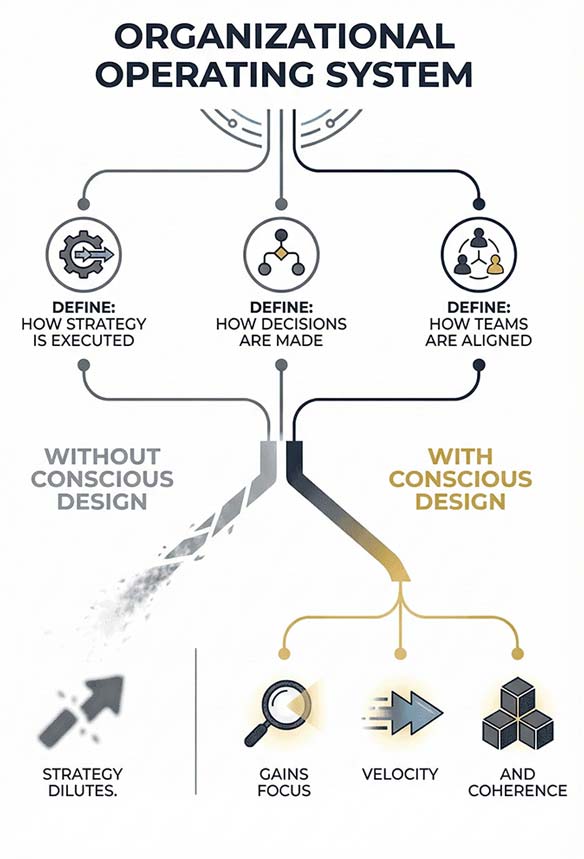
In 2026, internal communication acts as an organizational operating system. it defines how strategy is executed, how decisions are made, and how teams are aligned.
When this system is not consciously designed, strategy becomes diluted. when it is, organizations gain focus, speed, and coherence.
Leadership and human skills in internal communication
We are living in a moment where technology—especially artificial intelligence (AI) and automation—redefines tasks, processes, and work structures.
This transformation brings clear benefits: efficiency, speed, data, and automation of repetitive tasks. however, it also creates real challenges: information overload, anxiety around change, fear of losing meaning, obsolescence, and impersonal work.
According to recent studies, in highly automated environments with data-driven evaluation, technical aspects are often prioritized while emotional dimensions are overlooked. AI can provide analysis, but it cannot replace trust, empathy, or psychological safety.
In this complex context—hyperinformation, productivity pressure, intense workdays, constant change—the need to support people becomes evident.
Human and empathetic leadership
In environments of constant change, leadership plays a key role in:
- Building trust
- Sustaining difficult conversations
- Supporting transformation processes
- Reducing internal uncertainty
Development of communication skills
Training is no longer focused solely on tools and processes. instead, it incorporates capabilities such as storytelling, active listening, difficult conversations, and change management.
Cognitive AI and human AI in internal communication
The key question is no longer “what can AI automate?” but rather “what do we want AI to do, and what should remain uniquely human?”
Communicators integrate algorithms that guide decisions and personalize messages, while preserving empathy, cultural awareness, and creativity for people. the result is not only efficiency, but expanded capability.
What can we expect from AI this year in internal communication?
AI as an efficiency tool
- Automate repetitive tasks
- Personalize messages at scale
- Classify internal audiences
- Measure impact in real time
AI agents in internal communication
They resolve questions, guide onboarding processes, and reduce operational workload, as long as a clear strategy is in place.
Ethical and responsible use of AI
Technology cannot advance without responsibility. the challenge will be ensuring transparency, data protection, and avoiding dehumanized communication.
Micro-communities and internal networking
Successful organizations will be those that evolve from rigid pyramids to collaborative and flexible models—without impositions, labels, or fixed schedules.
How does this work?
Internal micro-communities
These spaces make it possible to:
- Reduce organizational silos
- Increase participation
- Facilitate knowledge sharing
- Strengthen a sense of belonging
Internal networking and cross-functional collaboration
Organizations promote internal networks that connect areas, disciplines, generations, and hierarchical levels. these networks facilitate experience exchange, multiply innovation, shorten coordination times, and elevate collective intelligence. employees are no longer “locked” into a role and instead expand their relational capital within the company.

Micro-communities and communities of practice
Self-organized teams that share professional interests—such as data, customer experience, communication, agility, or well-being—operate as cultural laboratories where the organization’s future is prototyped from within.
Micro-communities and internal networking become the new vital organs of organizational culture.
Diagnosis, change management, and 360 internal communication
For this community-based and flexible structure to truly work, goodwill is not enough. it requires conscious cultural change plans, internal diagnostics, and comprehensive professional support—something only a 360 service approach can provide.
According to Gallagher’s employee communications report:
68% of internal communicators consider building culture and a sense of belonging a priority 67% identify it as key for strategic business alignment
Additionally, an internal communication diagnosis makes it possible to:
Identify information flow failures
Detect silos between areas
Measure climate and engagement
Prioritize strategic actions
Talking about internal networks, horizontal structures, or micro-communities without a solid internal communication diagnosis and planned cultural change management is simply a gamble.
At Oxean Cross, as a leading internal communication agency, we offer a 360 service—diagnosis, strategy, implementation, measurement, and ongoing support—that is essential to turn this vision into concrete results.
The future of internal communication starts now
Without a doubt, in 2026 internal communication will leave behind its tactical role and become a strategic accelerator for business.
The challenge for organizations will be to embrace these trends not as passing fashions, but as a new standard—one where technology empowers, leadership humanizes, sustainability provides meaning, and personalization brings every employee closer to the center of the experience.
The future of internal communication is neither technological nor human. it is technologically human. and it starts now.
2026 is just beginning. if you want to understand where your organization’s internal communication stands today and what steps to take to align it with the new standard, let’s talk.
FAQ – Frequently Asked Questions
What do internal communication trends for 2026 reveal about the new role of IC?
They signal a shift from tactical messaging to strategic business infrastructure: internal communication becomes the “operating system” that enables alignment, execution, trust, and cultural coherence across the organization.
Which internal communication trends for 2026 matter most for personalization and employee experience?
The biggest priorities are hyper-personalization (relevant messages by role and context), reducing noise and overload, and designing the digital employee journey so people receive what they need at the right time and in the right format.
How will AI and AI agents shape internal communication trends for 2026?
AI will scale segmentation, personalization, and real-time measurement, while AI agents can support onboarding and employee queries. The key is responsible use—keeping empathy, cultural reading, and trust as uniquely human strengths.
Why will leadership and human skills be critical in 2026?
As automation increases, people need leaders who reduce uncertainty, sustain difficult conversations, and build psychological safety. Communication skills like active listening, storytelling, and change management become core capabilities.
What are internal micro-communities and why do they matter for culture?
Micro-communities are self-organized internal spaces built around projects, expertise, or shared interests. They reduce silos, multiply collaboration, accelerate knowledge-sharing, and strengthen belonging—acting as “cultural labs” inside the company.
What is the best first step to adopt these trends without creating initiative fatigue?
Start with an internal communication diagnosis to identify flow failures, silos, engagement signals, and priorities. Then build a 360 roadmap (strategy, implementation, measurement, and support) aligned to business goals and culture.