
Today, technology is advancing faster than organizational processes. In this context, many organizations debate whether to adopt tools simply because they are trending or to integrate them with a clear purpose within their strategy. Therefore, analyzing AI trends for internal communication in 2026 becomes a key exercise to understand how artificial intelligence can move from being a technological trend to becoming a real competitive advantage.
In this article, we explore how internal communication teams can transform enthusiasm for AI into a strategic tool that optimizes processes, improves the employee experience, and strengthens organizational culture.
Why in 2026 AI stops being a “trend” and becomes a competitive advantage in internal communication
The pressure to “do something with AI” is already part of daily corporate life. In fact, the Work Trend Index 2024 from Microsoft and LinkedIn (May 8, 2024) indicates that:

75% of knowledge workers already use AI at work.
However, behind that enthusiasm there is also real uncertainty. Many internal communication leaders feel pressure to innovate, yet they are not always sure about the “how” or the “why.” As a result, AI often becomes more of a fashionable accessory than a strategic engine.
For large organizations, the challenge is not simply adopting technology. Instead, the real task is filtering out the noise and applying artificial intelligence where it truly adds value, optimizes processes, and, most importantly, enhances the human factor.
Trend-driven adoption vs purpose-driven integration
In internal communication, this often happens:
- A bot or text generator is launched in isolation.
- One department gets excited, but there are no rules or metrics.
- Eventually it is used only to “get things done quickly,” without improving processes.
What changes when AI enters processes (not just writing)
When AI is properly integrated, internal communication teams:
- reduce repetitive work (versioning, summarizing, adapting content by channel);
- accelerate production while maintaining editorial consistency;
- gain time for what truly sustains culture: conversation, leadership, and trust.
How to apply AI in internal communication strategically
At Oxean, we see it this way: AI is excellent at processing information, summarizing content, proposing drafts, and generating variations. However, internal communication requires empathy, cultural context, and political awareness. That layer remains human.
AI as a copilot: criteria and boundaries
We think of AI as a copilot. In other words, it can:
- propose options;
- organize ideas;
- accelerate iterations;
- help adapt messages for different channels and audiences.
However, key decisions—what to say, when to say it, how to say it, and with what sensitivity—remain human decisions.
What problems AI does NOT solve
Common mistakes include:
- expecting AI to compensate for a lack of strategic clarity;
- using it without verifying sources in sensitive topics;
- asking for “creative” outputs without a clear brief, goals, or brand tone.
Trend 1: strategy first when applying AI in internal communication
Before implementing agents or automations, the advantage in 2026 lies in doing the basics well: strategy, audiences, messages, channels, cadence, and measurement. That is where AI truly begins to add value.
Another common mistake is trying to make AI solve communication problems that are actually cultural or organizational issues.
How do we implement AI strategically?
- Personalization at scale: speaking to thousands of employees as if addressing one person;
- Time optimization:freeing the team from operational tasks to focus on creativity;
- Sentiment analysis and early signals:analyzing feedback and internal conversations to detect recurring doubts, friction points, or sensitive topics before they escalate.
Looking ahead to 2026, the most common AI use cases in internal communication usually focus on four areas: synthesis (summaries and meeting notes), multichannel adaptation (intranet, email, Teams or Slack), leader assistance (Q&A and talking points), and listening (emerging topics and workplace climate). Therefore, selecting one use case and implementing it first in a controlled pilot with guardrails is the safest way to turn trends into results.
As highlighted by Gartner’s technology trends report, success depends on combining AI with human-centered design.
Trend 2: AI video for internal communication campaigns
One of the fields where AI is breaking barriers is audiovisual production. Traditionally, internal communication teams have dealt with limited budgets or long production timelines that made frequent high-quality content difficult.
Today, generative AI video allows internal communication teams to act almost like film directors. However, it is important to understand that the goal is not to replace CEO messages or testimonial videos, which require authentic human presence. Instead, the goal is to create videos that otherwise would not be possible.
Imagine a corporate values launch video where scenarios change dynamically depending on the message. Or imagine a piece with a futuristic or surreal aesthetic designed to capture attention in an environment saturated with emails.
Key benefits include:
originality: creating visual worlds aligned with brand identity without relying on generic stock imagery;
impact: achieving a cinematic aesthetic that elevates the perception of internal messages;
agility: reducing post-production time from weeks to hours.
Use cases (values, change, safety, onboarding)
AI video works especially well for:
- corporate values and culture launches;
- safety and prevention campaigns;
- change management communications;
- onboarding stories tailored by department.
What should remain 100% human
- CEO or leadership messages during critical moments;
- Real employee testimonials;
- Sensitive communications such as crises, incidents, or structural changes.
Quick production checklist (brief → piece → review)
- Clear brief (goal, audience, emotion, channel);
- Script and storyboard;
- Visual style aligned with brand identity;
- Editorial review plus legal/compliance if required;
- Measurement (views, completion rate, feedback).
Trend 3: AI agents for internal communication teams
The daily work of internal communicators is often saturated with writing, channel adaptations, and revisions. This is where custom GPTs, trained AI agents, or Gemini Gems become valuable allies.
These assistants represent the next step in adopting AI for internal communication because they help scale processes while maintaining editorial consistency across channels.
At Oxean, we see it clearly: an internal communication team can train its own agent using the company’s tone of voice, style guide, and strategic goals. This is not simply a chatbot. Instead, it becomes a copilot that understands organizational culture and helps scale content production consistently.
Qué son y para qué sirven (GPTs, Gems, etc.)
In practice, these copilots help with:
- consistency: ensuring that every message—from a post on the internal app or intranet to a formal announcement—sounds aligned with the brand;
- versatility: turning a 20-page report into Slack bullet points, a video script, and an intranet article within seconds;
- brainstorming: acting as a writing and editorial planning partner;
- speed: reducing rework and increasing strategic focus.
Guardrails: lo que separa lo útil de lo riesgoso
At Oxean, we recommend establishing:
- which content requires mandatory review;
- limits on what should never be shared with AI;
- quality criteria such as tone, clarity, and accuracy;
- approval traceability for sensitive content.
Trend 4: AI with verified sources for internal communication
Among the many tools available, one in particular is changing the rules for research and knowledge generation: Google’s NotebookLM.
For internal communication teams handling large volumes of information—manuals, policies, meeting transcripts—this tool becomes extremely valuable.
NotebookLM and the document-grounded approach
Unlike other models, NotebookLM is grounded exclusively in your own documents. As a result, it reduces the well-known “AI hallucinations” because responses are generated only from the information you provide.
Key features of NotebookLM for internal communication
- Source management: upload PDFs, presentations, websites, or YouTube links and ask specific questions about the content;
- Cited responses: each answer includes the exact reference to the document fragment it came from (critical for audits or legal topics);
- Studio panel: create summaries, timelines, glossaries, drafts, quizzes, and flashcards, while also organizing ideas and building executive documents;
- Deep research: combine internal sources with verified external information to produce structured reports and save hours of research.
Audio overviews in more than 50 languages
Google has expanded Audio Overviews to more than 50 languages, which is especially useful for organizations with distributed teams and multilingual audiences.
In 2026, one major leap in maturity will be moving from “AI that sounds good” to “AI that answers with evidence.” In internal communication, accuracy matters—especially when dealing with policies, benefits, and processes.
Trend 5: generative AI images for internal communication
Visual communication remains a powerful driver of engagement. In 2026, the difference lies in moving beyond generic visuals and building a consistent visual identity for each campaign with speed and flexibility.
Generative AI tools such as Nano Banana, ChatGPT, Midjourney, Adobe Firefly, Seedream, Stable Diffusion, FLUX, and Leonardo.ai allow every internal message to have a unique visual identity.
Visual libraries by campaign (consistency and speed)
- 2–3 visual styles per campaign;
- Base asset set (banners, covers, scenes, icons);
- Documented prompts and brand guidelines;
- Rapid variations for multiple channels.
Best practices for generative images
- Define the objective in one sentence: what idea must be understood within three seconds and what action the image should support;
- Align with the brand: style, color palette, tone, and visual consistency across content;
- Protect privacy and compliance: avoid readable screens, credentials, names, emails, documents, or sensitive logos;
- Write high-quality prompts: include style, framing, context, lighting, mood, format, and what should be avoided;
- Conduct a final review before publishing: check hands, faces, eyes, and artifacts, and export optimized formats such as WebP or AVIF.
Although AI image generation is widely known, many organizations are still adopting it at different speeds. Often people explore these tools personally, while professional environments remain cautious due to lack of knowledge, rigid processes, or risk concerns.
Therefore, the real challenge is not simply using AI to generate images, but leveraging it creatively to expand visual storytelling in internal communication.
The future belongs to strategic curiosity
Artificial intelligence is not here to replace communicators. Instead, it frees them from routine tasks so they can focus on what truly matters: the human dimension.
AI is excellent at processing data and generating drafts. However, it lacks empathy, cultural context, and political sensitivity—qualities that internal communication requires.
At the same time, implementing these tools requires careful attention to security and ethics. That is why exploring the key challenges of AI in internal communication is essential for a successful transition.
At Oxean, we understand that AI is a powerful tool. Yet success still depends on the ability to connect people. Applying AI strategically is the path that allows organizations to move from “doing something” to actually “achieving something.”
Next steps for your internal communication team
1. Process audit
- Which repetitive tasks consume the most time?
- Where does rework occur most frequently?
- What processes can be standardized?
2. Safe experimentation (controlled pilots)
- One use case per channel;
- One limited campaign;
- Simple metrics: time saved, engagement, and comprehension.
3. Training (the investment that unlocks everything)
In 2026, the differentiating skill is not simply “using a tool.” Instead, it is:
- writing better briefs;
- reviewing outputs with criteria (quality and risks);
- designing workflows, not just prompts.
A Deloitte report highlights that the skills gap is the biggest obstacle. Therefore, investing in team training remains the best strategic move.
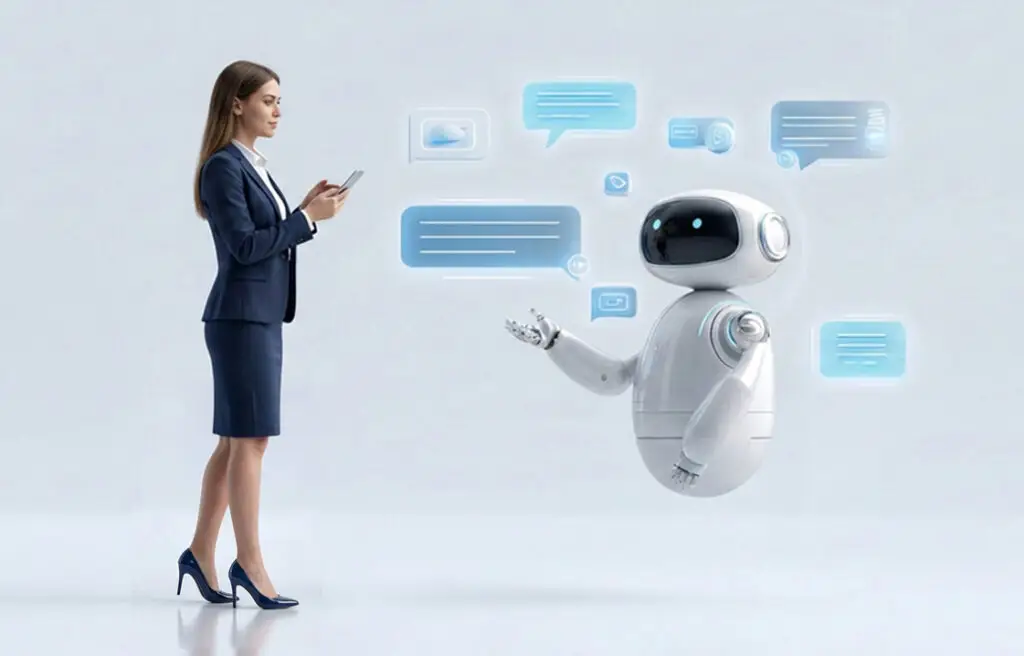
At Oxean, as a corporate communication agency focused on internal communication, we see AI as a powerful tool. However, success still depends on the most difficult aspects to automate: connecting people, structuring conversations, and building trust.
Understanding AI trends in internal communication does not simply mean adopting new tools. Instead, the real challenge is integrating them within a clear strategy that improves the employee experience, optimizes processes, and strengthens organizational culture.
Would you like us to help you design a customized workshop so your team can learn how to use these tools strategically?
FAQ – Frequently Asked Questions
What are the 5 main AI trends for internal communication in 2026?
The five major trends are strategy-first AI adoption, AI video for internal campaigns, AI agents or custom GPTs for communication teams, AI grounded in verified sources, and generative AI images for faster and more consistent visual storytelling.
Why is a strategy-first approach so important when applying AI in internal communication?
Because AI only creates real value when it is integrated into processes with clear objectives, audiences, channels, and metrics. Without that foundation, it usually becomes a trendy tool that saves little time and adds little strategic impact.
When does AI video make sense for internal communication campaigns?
AI video is especially useful for culture launches, safety campaigns, change management, and onboarding stories that need speed, originality, and strong visual impact. It should not replace highly sensitive messages that require visible human leadership and authenticity.
What can AI agents or custom GPTs do for internal communication teams?
They can summarize long documents, adapt content for email, intranet, Teams or Slack, maintain tone of voice, and speed up editorial production. With the right guardrails, they work as copilots that improve consistency and reduce repetitive work.
Why is using AI with verified sources so relevant in internal communication?
Because internal communication often deals with policies, benefits, processes, and sensitive information where accuracy matters. Tools grounded in trusted documents reduce hallucinations, improve traceability, and make responses easier to audit and validate.
How can generative AI images improve internal communication without creating risks?
They help teams create campaign-specific visuals faster, maintain brand consistency, and avoid generic stock imagery. The key is to define the communication objective, follow brand guidelines, protect privacy, and review every asset before publishing.